Jean Lafitte Biography
Jean Lafitte (born around 1776, died around 1823) is today remembered as one of the most successful pirates and privateers of the early
19th century. During his lifetime he gathered significant and colorful fame, with many people thinking of him to be either hero (who fought for the
independence of United States economy) or the notorious pirate. Operating in the waters of Mexican Gulf, he managed to organize fleet of pirate a
smuggling vessels for the purpose of conducting free and untaxed trade with the city of New Orleans. For that purpose Lafitte was regarded as a great
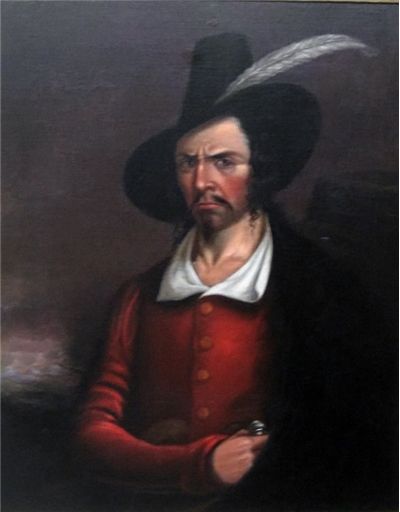
hero by the people who lived in that area, and a criminal by the US authorities.
Very little is known about his youth. Many historical reports claim that he was born between 1770-1776 widely different
places, from Bordeaux in France, all up to French territories of Saint-Domingue (located in modern day Tahiti). Lafitte came into providence after
1804 when Louisiana became part of a United States territory, and after government started enforcing famous Embargo Act of 1807 that stated that
American trade ships cannot visit any foreign ports. This law opened the way for the smugglers to start brining illegal goods to the Louisiana ports, and Jean
Lafitte managed to exploit this situation for his gain. He and his brothers managed to establish illegal port at the sparsely populated island of
Baratria, in Barataria Bay. With good trade position, and good distance from the closest US naval military base, this island became heaven for smugglers and
privateers of the early 19th century. By 1810, constant arrival of smuggled goods and constant transfer of money and valuables gave birth to the
rise of the port in Barataria. Many new facilities became erected, and Jean Lafitte spent his entire time on the island regulating and managing day-to-day
business of outfitting privateers and arraigning the transfer of stolen goods.
After the start of the American war of Independence, Lafitte received call of help to come and defend New Orleans against
British forces. According to some reports he brought 3000 people the "Battle of New Orleans", but other sources claim that he has much less fighters than
that, but he managed to provide crucial help to the US army by using his naval artillery cannons. In the short years after the war Lafitte still
represented great threat to the US economy, and soon after Louisiana Governor, William C. C. Claiborne put a price of $500 for Jean Lafitte's head. In
response Lafitte put a bounty on the Governor's head (reports say that it was either for $1500 or $5000), but no one managed to collect that
reward.
After 1817 Lafitte was forced to flee from Barataria, and he established new base of operation in Galveston, Texas. Although
he was expelled from there 5 years later, he continued with his life of piracy until his death in 1823 near the waters of Honduras. During the fight
with two Spanish trade ships, Lafitte came to realization that they were instead two heavily armed Spanish privateers ship who managed to inflict
substantial attack to Lafitte's forces. During that battle Lafitte was wounded and died on after the dawn of February 5th. He was buried at sea in the Gulf
of Honduras.